97% Seeded Since 2019: Confessions of a Torrent Queue That Won't Quit
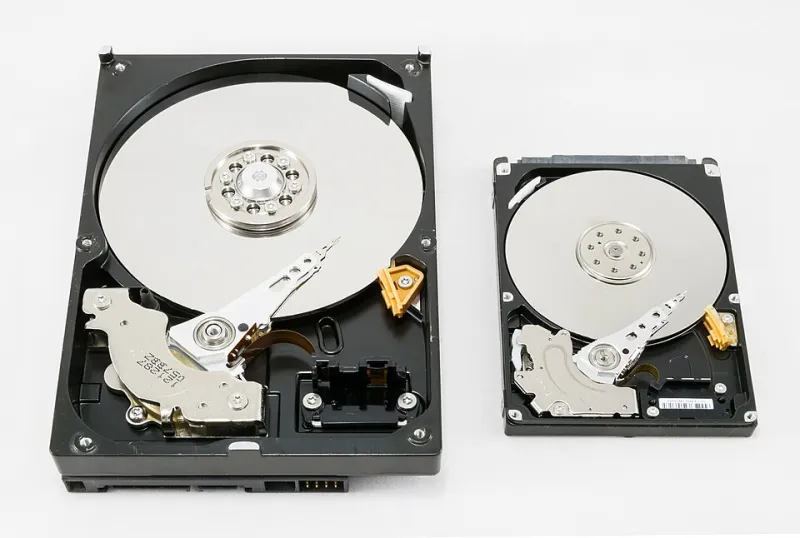
Photo: Jacek Halicki, CC BY-SA 4.0, via Wikimedia Commons
There's a folder on my NAS that I haven't opened in three years. It's not hidden. It's not forgotten, exactly. It just sits there — 4.2 terabytes of downloads, some of them seeded to ratios I should be proud of, most of them untouched since the previous presidential administration.
If you run any kind of home server, you know this folder. It's the digital equivalent of the garage in an American suburb: technically full of useful things, functionally a monument to good intentions.
The Archaeology of a Stalled Queue
Open your torrent client's history and you'll find strata. The bottom layer is the oldest — Ubuntu ISOs from versions with numbers that now look like zip codes. Above that, a season of a show you stopped watching halfway through. Then the 'educational' layer: documentaries, lecture series, a complete archive of a podcast that has a perfectly good RSS feed.
The pattern is always the same. You downloaded these files during a burst of enthusiasm, finished them (or got close), and then... nothing. The file completed. The interest didn't.
Here's the uncomfortable question: were you ever downloading the content, or were you downloading the idea of having it?
Why We Hoard What We Won't Watch
Psychologists call it the endowment effect — once something is 'yours,' you value it more than you would if you had to acquire it. A 60GB remux of a movie you might watch someday feels like an asset. Deleting it feels like a loss, even though you've never once opened it.
There's also the collector's logic. A single episode is a snack; a complete series is a set, and sets trigger something deep in the brain. Ask anyone with a shelf of unopened Funko Pops or a garage full of project cars. The completeness is the point. The consumption is optional.
And then there's scarcity anxiety, the quiet engine of all digital hoarding. 'It might not be there later.' Sometimes that's true — dead torrents are real, and archivists do valuable work. But most of us aren't preserving obscure film history. We're keeping a 1080p rip of a show that streams on three different services for $9.99 a month.
What the Queue Actually Costs You
It's not just disk space. Consider the real bill:
Drive wear. Seeding is generally light on hardware, but a client that's constantly rehashing a 4TB queue keeps spinning platters awake and SSDs counting reads. It's not catastrophic, but it's not free either.
Electricity. A NAS that never sleeps because the queue never ends costs real money on a US power bill — especially in states where residential rates keep creeping upward.
Mental overhead. This is the sneaky one. Every unfinished download is an open loop. It's a tiny notification in the back of your brain that says you're behind. Multiply by a few hundred files and you've built a low-grade anxiety machine that runs 24/7 in your own home.
Migration pain. The bigger the hoard, the harder it is to move, back up, or upgrade. Your queue isn't just storage — it's friction attached to every future storage decision.
The Triage Framework: Keep, Seed, Kill
You don't need a productivity system. You need three buckets and one honest afternoon.
Keep (actively used). Files you've touched in the last six months. Be brutal about the definition of 'touched.' Watching one episode doesn't count if you abandoned it at episode two.
Seed (honorably). Rare, hard-to-find, or genuinely scarce material — the stuff with no legal streaming alternative and dying seed counts. This is where your seeding actually means something. Keep these, cap your share ratio if you like, and feel good about it.
Kill (without ceremony). Everything available elsewhere, everything you've 'meant to watch' for over a year, and everything you can't remember downloading. If a file's absence would genuinely upset you in a week, you'll know — and you can always re-download it.
One practical trick: sort your queue by last accessed date, not by size or name. The date column is the honest one. Size lies. Names lie. 'Last opened: never' does not.
Build a Queue That Doesn't Rot
After the purge, change the intake, not just the output.
Set a one-in, one-out rule for media downloads. Give every new download a 'probation' — if it sits unopened for 90 days, the client (or a cron job, if you're that kind of person) flags it for deletion. And separate your archival downloads from your entertainment ones. Archives get checksummed and backed up properly. Entertainment gets an expiration date.
The goal isn't to stop downloading. It's to make sure your queue reflects what you actually want — not who you briefly imagined you'd be on some Tuesday night in 2019.
Your drives will thank you. Your electric bill will thank you. And that open loop in the back of your head? It finally closes.