Nobody's Coming to Save That File: The Quiet Case for Hoarding the Internet

Here's a fun experiment: try to find a working download link for the CD-ROM version of a 90s encyclopedia. Or the original installer for a piece of software a company killed in 2011. Or that fan-made mod patch for a game whose publisher no longer exists.
I'll wait.
The internet feels permanent. It is anything but. Researchers who've tracked link rot — the slow decay of URLs — have found that roughly a quarter of links shared on the web stop working within a decade. On social platforms, it's worse. And torrents have a simpler failure mode: a torrent with zero seeders is a ghost. The file technically exists in a hundred hard drives, and functionally exists nowhere.
The Stuff Disappearing Isn't Junk
When people hear "digital preservation," they imagine someone backing up cat videos. But look at what actually vanishes:
- Out-of-print software that companies will never sell again and will send a cease-and-desist if you ask about
- Abandonware games whose rights holders dissolved before anyone inherited the IP
- Community forums and mod databases that shut down and took twenty years of knowledge with them
- Local news archives, indie music, zines, datasets — the long tail of culture that no streaming service will ever license
Game historians have spent real money buying old consoles and drives at estate sales just to extract data before it degrades. Entire eras of early web design survive only because a handful of people ran personal archives and didn't throw the hard drives away.
Is It Ethical to Keep This Stuff?
Let's be honest about the gray areas. Downloading a game you can buy on GOG is piracy. Downloading a game that has not been sold, supported, or acknowledged by its owner in twenty years is something more complicated — and increasingly, even rights holders quietly agree. Some publishers have started turning a blind eye to preservation efforts precisely because the alternative is the work ceasing to exist.
The line most archivists draw: preserve what would otherwise be lost, don't profit from it, and don't distribute things that are actively for sale. Where you land personally is your call. But I'd argue there's a strong case that keeping a copy of something doomed is closer to recycling than theft.
How to Actually Archive for Decades
If you're going to be the last seeder, do it right.
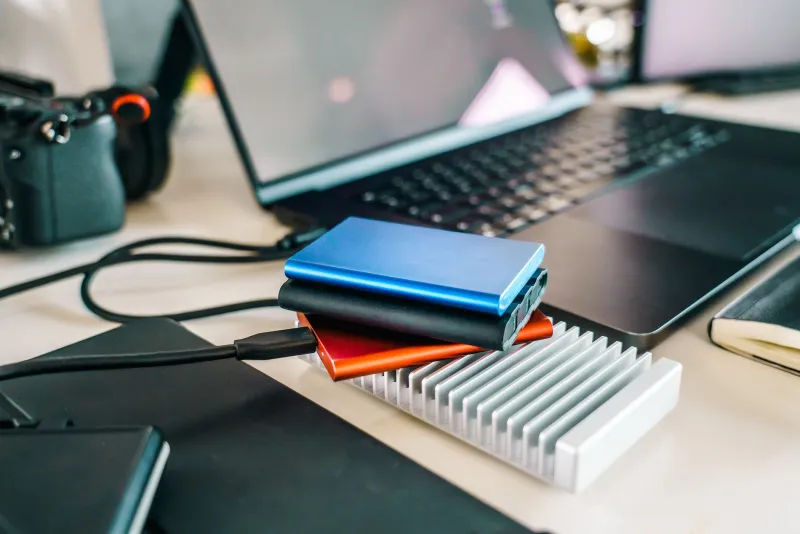
Buy storage that outlives your interest. Enterprise-grade HDDs and SSDs are cheap now — a 4TB drive costs less than a nice dinner. But note: hard drives fail if they sit unpowered for years. Cold storage needs attention.
Follow 3-2-1 for anything you care about: three copies, two different media types, one offsite. A drive in your closet plus a cloud backup plus a friend's drive in another state beats any single perfect solution.
Verify annually. Set a calendar reminder. Plug drives in, run a checksum tool (free ones like md5sum or checksum utilities built into file managers), and confirm nothing has silently corrupted. This is called bit rot, and it's real.
Use open formats. A .docx from 2003 opens fine today; a proprietary format from a defunct app might not open in 2043. PDF, FLAC, PNG, MKV — boring formats are immortal formats.
Seed what you download. If you grab a rare torrent, leave your client running. Ratio requirements exist for a reason: a torrent only lives as long as someone's willing to upload. Be someone.
Owning Storage Is a Civic Act
We've spent fifteen years renting our digital lives — streaming instead of owning, cloud-syncing instead of keeping. It's convenient until a service shuts down, a license lapses, or a price triples. Then the thing you loved is just... gone, and there was never anything you could have done about it.
Except there was. Someone could have kept a copy.
Archives don't get built by institutions alone. The Internet Archive is a nonprofit running on donations; most niche preservation projects are a few volunteers with external drives. The unglamorous backbone of digital memory is ordinary people deciding that a file mattered enough to keep.
So back up the weird stuff. Seed the dead torrents. Keep the installer for the software that made you fall in love with computers. Future you — and future everyone — might be grateful.